Understanding Havening & Healing
A gentle introduction to the different pathways of healing, emotional regulation, and Havening Techniques®.

1. Pharmacology
(Helping calm the nervous system)
Medication can sometimes help reduce the intensity of anxiety, depression, panic, insomnia, or emotional overwhelm. For many people, this creates enough stability to begin engaging in life again.
Medication does not necessarily remove the underlying causes of distress, but it can help create breathing space and relief while healing work takes place.
Imagine emotional distress as being surrounded by angry bees.
Medication can sometimes feel like carefully placing the bees into a glass jar.
The bees may still be there, but they are more contained — meaning we are less likely to keep getting stung.
For some people, this relief can be life-changing and deeply important.
Different Pathways Toward Regulation, Understanding, and Healing
Different approaches may support people in different ways depending on their needs, experiences, and stage of recovery.

2. Psychotherapy
(Understanding patterns, experiences, and meaning)
Psychotherapy involves talking, reflecting, processing experiences, and understanding the emotional patterns that shape our lives.
This can help people make sense of their experiences, develop insight, build coping skills, and create new ways of responding to challenges.
Therapy can be deeply healing because feeling understood and emotionally supported matters.
Psychotherapy can sometimes feel like studying the bees under a microscope.
We begin understanding:
Why the bees appeared
What triggers them
Why certain situations lead to being stung
How past experiences shaped our responses
Understanding the bees can reduce fear and increase self-awareness.

3. Psychosensory Approaches (including Havening Techniques)
(Working with the nervous system directly)
Psychosensory approaches work with the brain and body together.
Rather than only talking about distress, these approaches help calm and regulate the nervous system itself. Havening Techniques® is one example of a psychosensory approach.
By combining soothing touch, distraction, safety, and neuroscience-informed methods, Havening aims to help reduce the emotional intensity connected to stressful or traumatic experiences.
Psychosensory approaches can feel like removing the stingers from the bees.
The bees may still exist in the background — memories may still be there — but instead of repeatedly getting stung, the experience becomes far less distressing.
What once felt overwhelming may eventually feel distant, manageable, or simply mildly annoying.

What is Havening Techniques®?
Havening Techniques® is a gentle psychosensory approach designed to help calm the nervous system and reduce the emotional impact of distressing experiences.
Developed by Dr Ronald Ruden and Dr Steven Ruden, Havening combines neuroscience, soothing touch, focused attention, and distraction techniques to help the brain process emotional distress differently.
Many people describe Havening as:
calming
grounding
emotionally relieving
surprisingly gentle
Havening is not about “forgetting” experiences.
Rather, it aims to help reduce the emotional sting connected to them.
Some people describe it as finally being able to remember something without feeling emotionally overwhelmed by it.
Others describe feeling lighter, calmer, safer, or more emotionally settled afterward.
How Does Havening Work?
When we experience distressing or overwhelming events, the brain and body can sometimes remain “stuck” in patterns of emotional alarm.
This may contribute to experiences such as:
anxiety
panic
hypervigilance
emotional overwhelm
shame
intrusive memories
strong emotional or physical reactions to reminders of painful experiences
Havening aims to help calm these alarm responses through soothing sensory input, safety, distraction, and nervous system regulation.
In simple terms, it may help the brain recognise:
“This experience is no longer happening right now.”
A Gentle Neuroscience Perspective
Havening Techniques® draws upon neuroscience research exploring how emotionally charged memories are stored and activated within the brain and nervous system.
During a Havening session, soothing touch and carefully guided distraction techniques are used while briefly activating aspects of emotional distress in a safe and manageable way.
The aim is not to force people to relive painful experiences.
Rather, the intention is to help the nervous system process these experiences differently — reducing the emotional intensity connected to them over time.
How the Brain Learns Danger
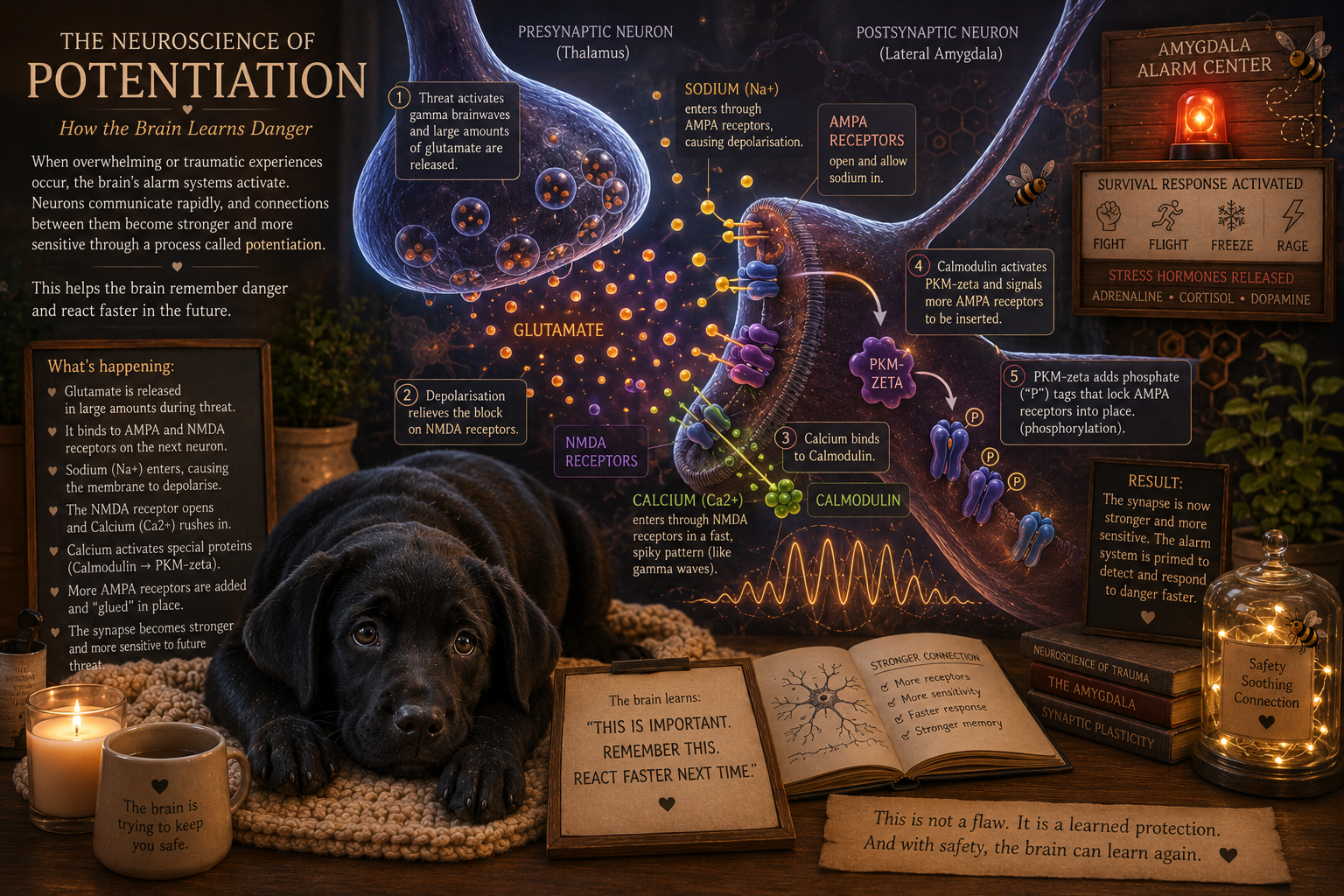
When overwhelming or traumatic experiences occur, the brain and nervous system rapidly shift into survival mode.
This activates powerful emotional learning systems designed to help keep us safe in the future.
At the microscopic level, brain cells (neurons) begin strengthening certain alarm pathways through a process called:
potentiation
During this process:
stress hormones increase,
emotional signalling intensifies,
calcium enters the neuron,
and connections between neurons become stronger and more sensitive.
In simple terms:
the brain is learning,
“This is important. Remember this. React faster next time.”
This can be incredibly protective during genuine danger.
However, after trauma, the nervous system can sometimes remain over-sensitive long after the original event has passed.
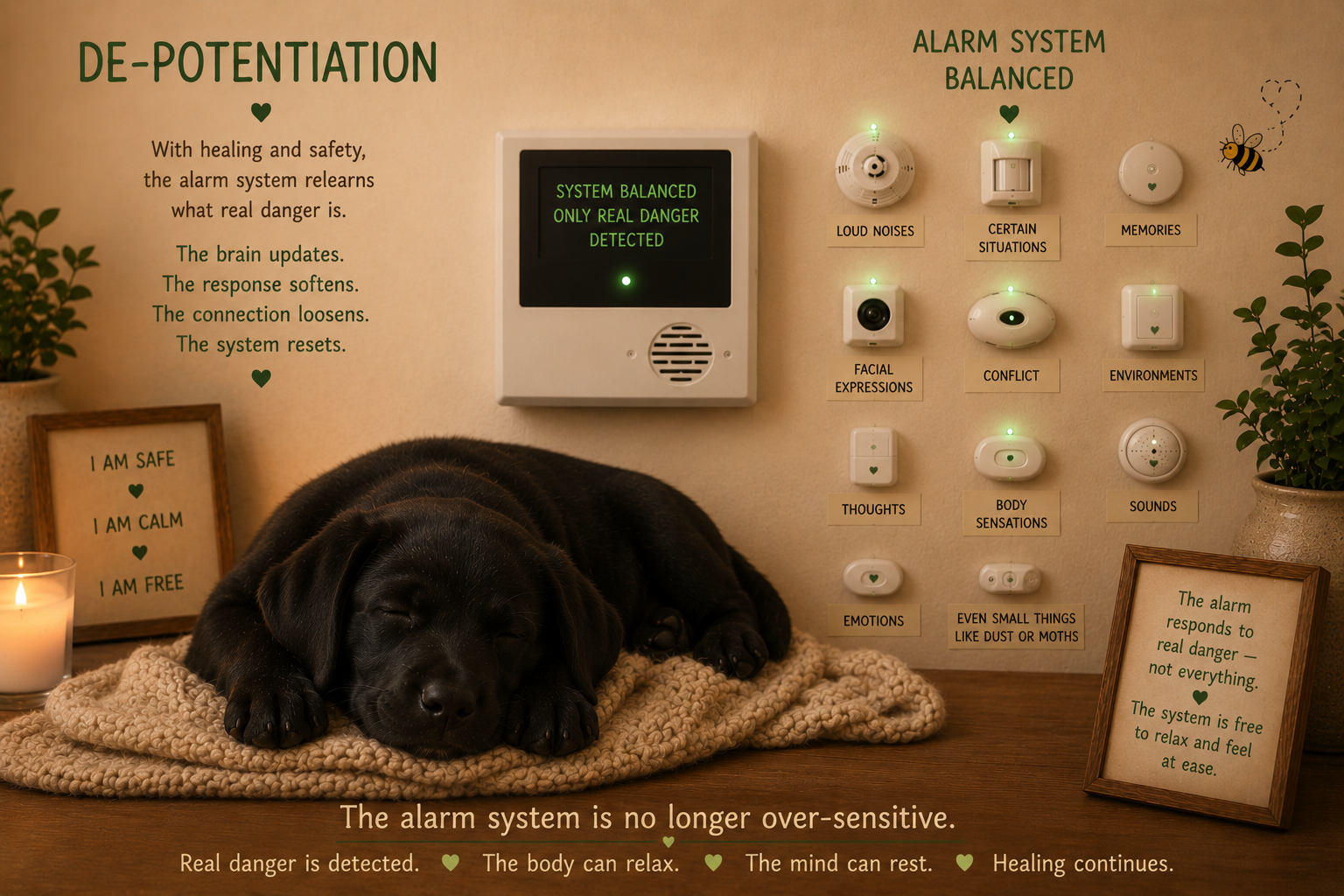
The brain may begin reacting strongly not only to real danger, but also to:
reminders,
memories,
conflict,
environments,
body sensations,
or emotional triggers connected to past experiences.
You can think of it like the brain gradually adding more and more alarm sensors in an attempt to stay safe.
This is not weakness.
It is the nervous system trying to protect us using the best survival strategies it has learned.

Some of the neuroscience involved includes:
glutamate activation
AMPA and NMDA receptor activity
calcium signalling
synaptic strengthening
stress hormones such as adrenaline and cortisol
heightened emotional encoding within the amygdala
These systems help explain why traumatic memories can sometimes feel emotionally immediate, even years later.
How the Brain Learns Safety Again
After overwhelming or traumatic experiences, the brain can remain highly sensitive to danger signals long after the original event has passed.
This is because the brain has strengthened certain alarm pathways in an attempt to protect us.
However, the brain is also capable of change.
When experiences of:
safety,
soothing,
connection,
regulation,
and calm attention
are repeatedly introduced, the nervous system can begin updating those alarm pathways.
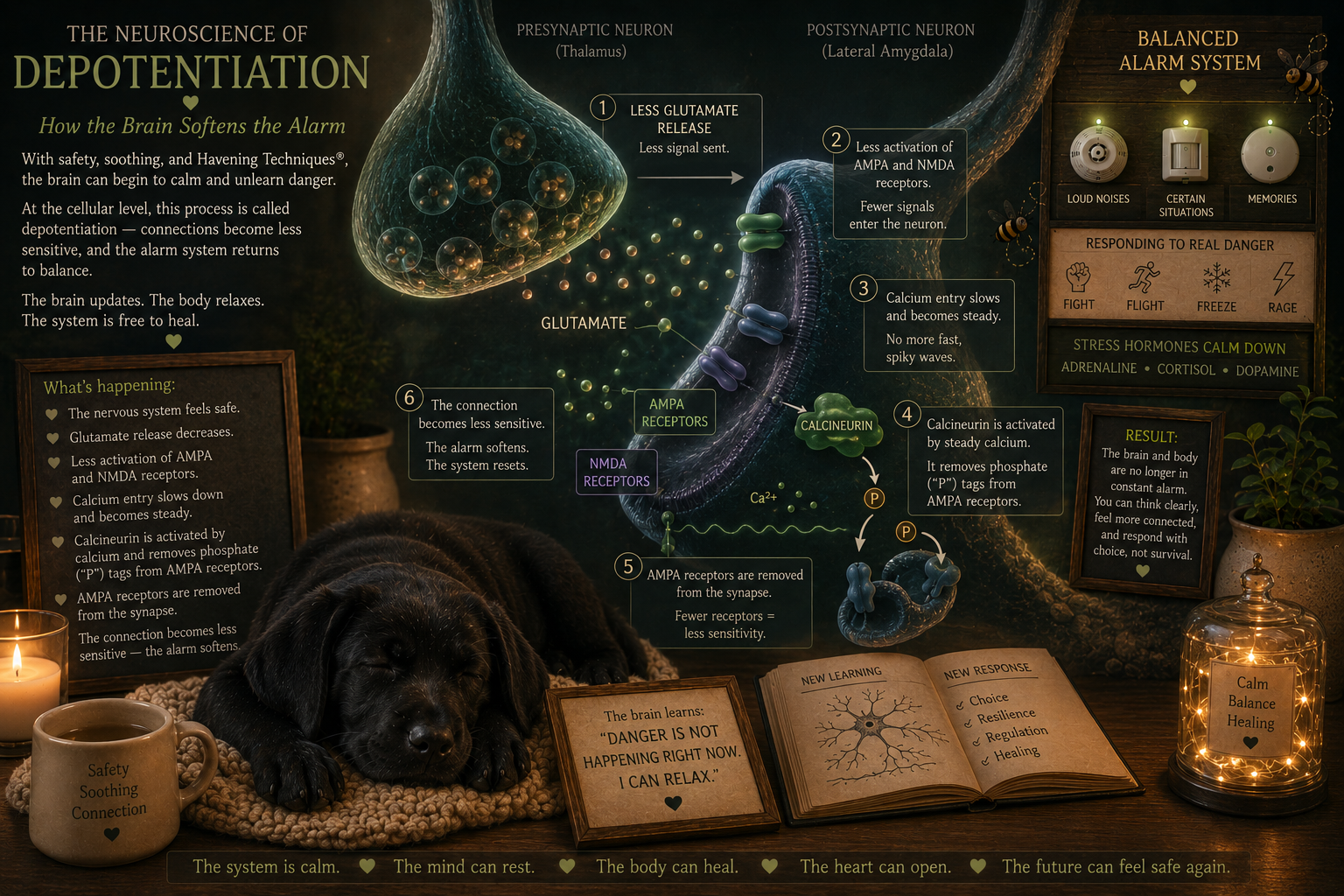
In neuroscience, the softening of these pathways is sometimes described as:
depotentiation
At the microscopic level, connections between neurons may become less reactive and less over-sensitive.
In simple terms:
the brain begins learning,
“I no longer need to stay on high alert all the time.”
This does not erase memories.
Rather, the emotional alarm connected to those memories may gradually reduce.
Over time, experiences that once triggered:
panic,
emotional overwhelm,
hypervigilance,
shame,
or strong survival reactions
may begin to feel:
more distant,
more manageable,
less emotionally charged,
or simply no longer dangerous.
You can think of it like the brain slowly removing unnecessary alarm sensors after discovering the danger has passed.
The goal is not to become emotionless or forget the past.
The goal is for the nervous system to regain flexibility, balance, and the ability to recognise:
“This experience is not happening right now.
I am safe enough in this moment.”
Some of the neuroscience thought to be involved includes:
reduced glutamate activation
calming of AMPA and NMDA receptor activity
slower and steadier calcium signalling
activation of calcineurin
removal of excess AMPA receptors from synapses
reduced emotional alarm activation within the amygdala
These processes may help explain why emotionally charged memories can sometimes begin to lose their overwhelming intensity over time.